Prime Minister Andrej Babiš rejected the Russian ambassador’s claim that the Czech government had softened its anti-Russian rhetoric, and the opposition called on the government not to underestimate Russian threats.
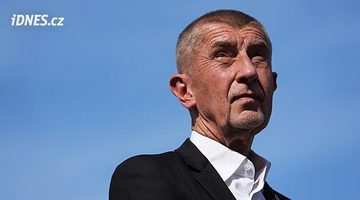
On 3 October 2026, Prime Minister Andrej Babiš (ANO) rejected the Russian ambassador’s claim that the Czech government had softened its anti-Russian rhetoric.[1][2][3][4][5] At the same meeting he said Europe should rather give the money intended for Ukraine to its reconstruction than to the war, and in his view arms makers, banks and energy producers are the main ones profiting from the war.[1] Asked by the Czech News Agency at an ANO pre-election meeting in Lipník nad Bečvou, Babiš said the claim was “certainly not true”.[1] Ambassador Anna Ponomarjovová made the statement in an interview with the Russian agency RIA Novosti, recalling Babiš’s earlier expression of support for talks with Russia on ending the war in Ukraine and his announcement that money from Czech citizens would not go to the ammunition initiative for Ukraine.[1] The opposition responded to the claim by calling on the government not to underestimate threats from Russia.[1][2][3] Barbora Urbanová (STAN), deputy chair of the Chamber of Deputies of the Parliament of the Czech Republic, said the government should make clear that the Czech Republic is ready to meet its commitments in NATO and to take part in the security of allies.[2] STAN chairman Vít Rakušan asked Babiš to convene a meeting on the security situation with the opposition taking part, and TOP 09 deputy Marek Ženíšek called the current government pro-Russian.[2] Former foreign minister Jan Lipavský (ODS) called the ambassador’s words a disgrace for the government and said that halting military and humanitarian aid to Ukraine serves Russian interests.[2] Foreign Minister Petr Macinka (Motoristé), by contrast, agreed with the ambassador and said the government had ended the style of “hysterical shouting” of the previous cabinet, which in his view had brought no benefit.[5]
Related articles: Government of the Czech Republic, Petr Pavel
Chronology
- — At a press conference at the ANO movement's election headquarters, Prime Minister Andrej Babiš (ANO) called the agreement between US President Donald Trump and Russian President Vladimir Putin on diesel deliveries a "big slap for Europe". ČTK / České noviny Novinky.cz
- — Prime Minister Andrej Babiš rejected the Russian ambassador's statement that the Czech government had softened its anti-Russian rhetoric, and the opposition responded by urging the government not to underestimate Russian threats. ČTK / České noviny iDNES.cz
- — Prime Minister Andrej Babiš met President Petr Pavel to discuss a response to a possible Russian attack in the Baltic states and the agenda of the next meeting of the National Security Council. iROZHLAS Seznam Zprávy
Pages linking here
Meeting with the president on 29 September 2026
Prime Minister Andrej Babiš met President Petr Pavel on 29 September 2026. According to the publications, they discussed the response to a possible Russian attack in the Baltics and the agenda of the next meeting of the Bezpečnostní rada státu.[6][7][8][9]
Reaction to the Trump–Putin deal on diesel supplies
On 10 October 2026, at a press conference at the ANO election headquarters, Prime Minister Andrej Babiš (ANO) called the deal between US President Donald Trump and Russian President Vladimir Putin on supplies of Russian diesel a big slap in the face for Europe. Asked by the Czech News Agency, he said Europe should react, and called the deal shocking because Trump had long reproached Europe for buying this commodity in Russia. He conceded that Trump has an election ahead of him and said he was curious about colleagues’ reactions at the European Council. If Europe does not understand that it must start acting, things will not end well, he said.[10][11][12]
Trump announced the deal on Friday 9 October on the Truth Social network. According to his post, Russia is to deliver more than 300,000 tonnes of diesel to the American and world market immediately, another 500,000 tonnes during November and then one million tonnes, and, depending on the state of refineries, a further three million tonnes shortly after. According to the AP agency, the president is thus trying to deal with high fuel prices in the United States before the November elections.[11]
Minister of Industry and Trade Karel Havlíček (ANO) said Europe is the energy loser of wars, because the price of diesel in Europe is 40 percent higher than in the United States and the situation with gas is similar. Foreign Minister Petr Macinka (Motoristé) told the Czech News Agency that he would like to believe that if Putin wants to sell diesel, he will also want to negotiate peace; according to him it is so far unclear whether Russia offered concessions for the deal, and he does not expect an impact on fuel prices in the Czech Republic. Former prime minister Petr Fiala (ODS) said, according to the Czech News Agency, that the deal will not bring a lasting reduction in prices and is part of an election campaign, and he believes it will strengthen the financing of Russia and limit Ukraine’s ability to defend itself.[10][12]
Sources
- ČTK / České noviny — 3 October 2026
- iDNES.cz — 3 October 2026
- Lidovky.cz — 3 October 2026
- ČT24 — 3 October 2026
- Novinky.cz — 3 October 2026
- iROZHLAS — 29 September 2026
- Seznam Zprávy — 29 September 2026
- iDNES.cz — 29 September 2026
- Lidovky.cz — 29 September 2026
- ČTK / České noviny — 10 October 2026
- Novinky.cz — 10 October 2026
- Seznam Zprávy — 10 October 2026