The municipal elections of 9 and 10 October 2026 include a record 19 local referendums on building wind power plants in municipalities across Czechia.
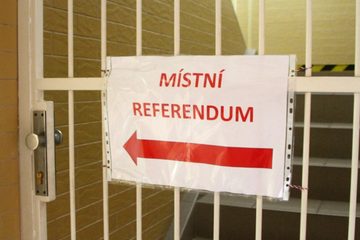
The referendums on wind power plants during the 2026 municipal elections are a set of 19 local votes held at the same time as the elections to municipal councils on 9 and 10 October 2026 [1]. The referendums decide on the construction of up to 81 new wind turbines with a total output of 450 megawatts, which according to an analysis by the Svaz moderní energetiky corresponds to more than a doubling of the existing wind capacity in Czechia and to electricity production for roughly 400,000 households [1]. About 220 wind power plants with an output of 380 megawatts are in operation in the country [1].
Where the votes are held
The most referendums are held in the Central Bohemian Region, specifically in Petrovice in the Rakovník area, Kačice in the Kladno area, and Petroupim, Soběhrdy and Teplýšovice in the Benešov area [1]. Four votes take place in the Svitavy area in the Pardubice Region, in the municipalities of Dětřichov, Kamenná Horka, Mikuleč and Sklené [1]. In the Bruntál area in the Moravian-Silesian Region, residents of Horní Benešov, Staré Heřminovy and Zátor vote [1]. In the Plzeň Region the referendums are held in Kralovice, Žihle and Měčín, in the South Bohemian Region in Radenín and Šebířov in the Tábor area [1]. Votes are also held in Cítoliby in the Louny area in the Ústí nad Labem Region and in Bystrá nad Jizerou in the Semily area in the Liberec Region [1].
In Kačice in the Kladno area, residents had earlier supported the project in a poll, the municipality then concluded a planning agreement with the investor NOHO Energy, and construction of five power plants is being prepared, the project of which is going through an environmental impact assessment [2]. Some of the residents then drew up a petition and demanded a binding referendum, which the council granted [1]. The deputy mayor of Kačice, Daniela Veselská, said that wind power plants can "bring money to the municipality and at the same time strengthen the energy self-sufficiency of our municipality" [1]. If the five power plants were put into operation, the municipality would receive a one-off CZK 6 million and then CZK 3.5 million a year for the duration of operation, and residents would also have preferential electricity prices [2]. In Petrovice in the Rakovník area, according to mayor Radek Jelínek, one power plant is to be built, and the municipality would receive from the investor CZK 400,000 to 1.5 million a year depending on the amount of electricity produced [2].
Development in the number of referendums
Before the October votes, 84 referendums on wind power plants had been held in Czechia, and roughly a third of the municipalities voted in favour of construction [1]. Whereas between 2006 and 2022 an average of one to two such votes were held a year, 2026, with 30 referendums, is the highest so far [1]. After the October elections the total number of referendums on wind power plants held in Czechia since 2006 is expected to exceed one hundred [1]. Under the law, a referendum is valid if at least 35 percent of eligible voters take part [2].
Arguments of supporters and opponents
Energy expert Martin Ander of the Svaz moderní energetiky said that the key to a successful referendum is "open communication of the investor with citizens from day one" and that an offer of a guaranteed annual contribution to the municipal budget and cheaper electricity significantly changes how the project is perceived [1]. According to Ander, wind power plants have been operating in Czechia for more than 20 years, and their operation shows that fears of noise or of effects on the health of animals have not been confirmed [1]. Opponents of the projects, on the other hand, often mention concerns about noise, disruption of the character of the landscape, falling property prices and effects on surrounding ecosystems, including disturbance of birds of prey or destruction of protected anthills [1].
Acceleration areas and the questions in the referendums
According to Novinky.cz, the planned power plants are built mainly in open countryside with strong and steady wind; the greatest wind potential is in the Bohemian-Moravian Highlands, in Nízký Jeseník and in the Ore Mountains, but the specific location is limited by protected areas, distance from dwellings and protection of the character of the landscape [3]. The development of wind energy is to be accelerated by acceleration areas, whose delimitation the government approved in the Territorial Development Plan; permitting wind and solar power plants in them is to be simpler and faster, but after comments from municipalities and other institutions the state significantly reduced the originally proposed extent [3]. Power plants can also be built outside these areas, but investors cannot use the accelerated permitting regime there [3]. According to Kladenský deník, there are 49 sites designated for wind power plants in Czechia [2].
The wording of the questions differs between municipalities. In Kačice in the Kladno area, the vote is on whether the municipality should provide cooperation in the preparation, permitting or implementation of the construction of wind power plants in its cadastral territory [2]. In Petroupim in the Benešov area, the decision is on whether the municipality, as a party to the proceedings on permitting the project, should express disagreement with the siting and permitting of the power plants [2]. Residents of Soběhrdy and Teplýšovice in the Benešov area answer questions on whether the municipality should take all legally available steps to ensure that no acceleration areas are delimited on its territory and no wind power plants are permitted; all three municipalities lie in the locality where the Petroupim acceleration zone is situated [2].
Positions of the mayors of Kačice and Petrovice
The mayor of Kačice, Libor Němeček, supports the project. According to him, building renewable sources in combination with nuclear power plants is the only way to prevent emissions from fossil fuels. He also regards money for the municipality and its residents as a benefit and said that locals fear an intrusion into the landscape and noise [2].
In Petrovice in the Rakovník area, according to mayor Radek Jelínek, the power plant will not burden the municipality except for its visual impression, because it will be far enough from buildings. Further power plants are to be built in the surroundings, and residents of Petrovice will therefore probably have a view of one of them, even though none will be built in the municipality's cadastral territory [2].
Other local referendums in the South Bohemian Region
Besides the referendums on wind power plants in Šebířov and Radenín in the Tábor area, other local matters are also being decided in the South Bohemian Region. In Temelín, on 9 and 10 October 2026 a vote is held on an incinerator for hazardous industrial waste that the company Quail wants to build in Hůrka near Temelín. The facility, costing one to two billion crowns, would process up to 20,000 tonnes of waste a year. A petition with 2,400 signatures was launched against the project, and another 16 towns and municipalities joined the protest. According to the mayor of Temelín, Josef Váca, residents are to decide in the referendum whether the municipal leadership should take all possible steps to prevent the construction.[4]
Further referendums concern the planned expansion and change of waste-burning technology at the Energoblok Domoradice heating plant in Přísečná in the Český Krumlov area, a bypass of Volary in the Prachatice area, and the reconstruction of a road around a pond in Putim in the Písek area. According to Deník, the Putim referendum is scheduled for Friday and Saturday.[4]
Referendums in Přísečná, Volary and Putim
In Přísečná in the Český Krumlov area, the local referendum concerns the planned expansion and change of waste-burning technology at the private heating plant Energoblok Domoradice, which supplies heat and hot water to a quarter of Český Krumlov [4]. Residents of the municipality, which has about 200 inhabitants, signed a petition against the project in 2023 and fear higher noise and traffic. Mayor Jiří Němeček (non-party) said that the municipality wants to use the referendum to find out whether people are still opposed and whether it should continue its current steps [4].
In Volary in the Prachatice area, the opposition and Šumava associations criticise the widening of the road from Blažejovice to Volary planned by the region, which in their view would bring more heavy traffic to the town. They propose a bypass, and 689 people signed a petition for calling a referendum on it. The town also fears increased traffic because of the logistics centres planned in the České Budějovice area [4].
In Putim in the Písek area, the referendum concerns the reconstruction of a road around a pond. According to mayor Eva Marušková (Za rozvoj obce Putim), the municipality had tendered the contract and obtained a subsidy before the proposal to call a referendum was filed [4].
Referendum in Kožlany
In Kožlany in the Plzeň area, on 9 October 2026, at the same time as the municipal and Senate elections, a referendum was held on the construction of three wind power plants that the company Meridian is considering in the town of about 1,500 inhabitants [5][6]. According to the election commission, interest in voting was greater than in previous years from the opening of the polling stations. Most of the first voters approached said that they do not want the power plants and cited the cultural and historic landscape and the proximity of the national cultural monument Mariánská Týnice [5][6].
Mayor Václav Kratochvíl said that three years ago the ratio among those voting in a survey was six to one in favour of wind power plants, and the town therefore concluded a contract on a future contract with the company. The councillors did not approve calling the referendum at the beginning of September, but a court decided that the plebiscite would be held, on the initiative of the petition committee [5][6]. A proposal for a type C landscape heritage zone, in which tall structures would not be possible, has been filed with the state heritage care department. A decision on it is expected, along with a statement from the army, which has a reserve military airfield on the edge of the town [5][6].
Results of the referendums in Majetín, Maršov u Úpice and Záhorovice
Majetín
Residents of Majetín in the Olomouc Region, in a referendum held at the same time as the municipal elections, voted against expanding gravel-sand extraction to stages six and seven. The municipality had 964 eligible voters, 640 cast a valid vote, and turnout was 66 percent. 497 people voted against the expansion. According to Hanácká Drbna the referendum is valid and binding for the municipality. Locals feared traffic, noise, dust, effects on the landscape and on groundwater. The extraction company Zepiko planned to move the extraction further from the municipality and offered the municipality more than CZK 70 million. Mayor Miroslava Zavadilová said that the referendum makes it possible to decide according to the clearly expressed will of citizens.[7][8]
Maršov u Úpice
Residents of Maršov u Úpice in the Trutnov area rejected in a referendum the construction of wind power plants in the municipality's cadastral territory. 116 of 154 voters took part (75.32 percent). To the first question, whether the municipal bodies should prevent the construction of the power plants, 77 people answered yes, and to the second, whether the council should ensure that the zoning plan does not allow the construction, 76 people did. The referendum is valid and binding and arose from a petition. The companies ČEZ and NOHO Energy expressed interest in building one to three wind turbines in the municipality. The municipal leadership rejected the offers; according to mayor Monika Sacherová (non-party) it did not want to divide residents over a single project. The municipality's cadastral territory does not belong to the acceleration zones declared by the state.[9]
Záhorovice
In two simultaneous referendums, residents of Záhorovice voted to keep all three railway crossings in the municipality. One referendum was initiated by a local group and concerned one crossing, the other was called by the council for the remaining two. Správa železnic is planning electrification and faster services on the section, and according to a prepared analysis two of the three crossings could be closed. Deputy mayor Jiří Milička said that the municipality needs all three for access to land and properties and that it is so far only an analysis.[10]
Results of the referendums in the Plzeň Region and additions on other municipalities
Plzeň Region
In the referendums held at the same time as the municipal elections, residents of Žihle, Kožlany, Kralovice and Měčín rejected the construction of wind power plants. For a local referendum to be valid, the law requires participation of at least 35 percent of eligible voters; the decision is binding if more than half of the participants vote for it and at the same time at least 25 percent of all eligible voters do.[11][12]
In Žihle, 52.77 percent of voters took part and 62.17 percent of them were against the construction; the result is valid. The referendum was proposed by a preparatory committee of local residents. ČEZ wanted to build two power plants on the edge of the municipality and another near the Baroque farmstead Kalec, which is a cultural monument. Preparation of the project has been halted since August, when the referendum was called. In the event of an agreement, the municipality would receive from ČEZ at least CZK 2 million a year for the duration of operation. In a poll that the municipality held in 2024, of about 150 participants half spoke in favour of the project and half against.[11][12]
In Kožlany, turnout was 42.21 percent and 61.24 percent of those voting were against; according to the town's official notice board, the referendum is valid and binding. The company Meridian wanted to build three power plants here on the edge of the town in the direction of Dřevec. Opponents cited the cultural and historic landscape, the proximity of the national cultural monument Mariánská Týnice and peace without industry.[11]
In Kralovice, 69.45 percent of voters were against. The proposal for a referendum was filed by citizens in a petition with about 840 signatures, and the councillors approved it at the beginning of September. In a poll that the town held in 2024, 52 percent of participants spoke in favour of the project, and the town therefore proceeded with a change to the zoning plan. The Czech company SmartTech wants to build two power plants here on the south side of the town in the valley in the direction of Výrov; Výrov agrees with four power plants in the direction of Kožlany. Opponents warned of an intrusion into the Baroque Cistercian landscape around Mariánská Týnice, of noise and of falling property prices.[11][12]
In Měčín in the Klatovy area, according to election commission clerk Vladimíra Fialová, 55 percent of voters took part and 86 percent of them rejected wind power plants; according to her the referendum is valid and binding. The vote was prompted by a group of residents of the municipality, which has about 1,100 inhabitants. Mayor Stanislav Skala said before the vote that two companies had so far only been finding out the conditions and had submitted preliminary offers; according to Fialová, the company Complexa wanted to build two to 13 turbines up to 250 metres high.[11][12]
Maršov u Úpice
The first question, whether the municipal bodies should take all steps to prevent the construction of power plants, received 77 yes answers (66.38 percent of those voting), the second, on amending the zoning plan, 76 (65.52 percent). Because of the deadlines the municipality had originally considered moving the referendum to another date, but on Thursday 8 October 2026 at an extraordinary meeting the councillors rejected cancelling it and confirmed that it would be held on Friday and Saturday. The municipal leadership rejected the 2025 offers of ČEZ and NOHO Energy because, according to the mayor, it did not want to divide residents and make decisions with an impact on the next electoral term.[9]
Majetín
According to iDNES.cz, the result of the referendum is binding for the councillors, because more than half of the participants voted for it and at the same time at least 25 percent of all eligible voters; both conditions were met. The question was whether the municipality should, in its independent competence, take all expedient legal steps to prevent gravel-sand extraction from being expanded to stages six and seven. In a letter to residents, the managing director of the company Zepiko stated that the extraction would be moved further from the municipality, behind the railway line, and its volume would not increase, so traffic and noise in the surroundings would not rise.[8][7]
Záhorovice
Deputy mayor Jiří Milička said that the municipality had expected the result: all three crossings are equipped with light signals and barriers, and the municipality needs them for access to land and properties. According to the analysis, two of the crossings could be closed, one without replacement, while for the other a bypass road would have to be built. Milička said that this would not achieve a significant speed-up, because the neighbouring municipalities are two kilometres away. He called the referendum, which arose on the initiative of some residents, unnecessary, because it is so far only an analysis by Správa železnic. The councillors then supplemented the referendum on one crossing with a referendum on the remaining two.[10]
Hrádek in the Hradec Králové area
In a binding referendum held at the same time as the municipal elections, residents of Hrádek voted in favour of taking over St George's church free of charge from church property into the property of the municipality. 52 people voted in favour, that is 33.5 percent of all eligible voters, and 43 against; of 155 eligible voters in the municipality of about 190 inhabitants, 64.5 percent came.[13][14]
Mayor Hana Ročková (independent) said that the municipality has better options than the church for obtaining subsidies for repairs of the listed church, and that because of the seriousness of a property decision the municipality called a referendum. The church could continue to hold services in the building; the municipality also wants to organise concerts, exhibitions, Christmas gatherings and weddings. Running costs, for example electricity and insurance, are estimated at thousands of crowns a year, and the municipality's income this year is about CZK 4.3 million. The municipality already owns the cemetery by the church. The church dates from the middle of the 14th century, the present early Baroque single-nave building from the end of the 17th century, it was repaired in 1891 and has been protected as a monument since 1958.[13][14]
Supplementary information on the referendums in Majetín, Maršov, Záhorovice and the Plzeň Region
Majetín
In Majetín there were 964 eligible voters, 640 of them cast a valid vote in the referendum, turnout was 66 percent and 497 voters spoke against expanding gravel-sand extraction. The concerns related to traffic, noise, dust, the character of the landscape and the effect on groundwater. According to Hanácká Drbna, residents were convinced neither by offers of discounts on sand and gravel nor by contributions to the municipality; according to its managing director, the company Zepiko wanted to provide the municipality with more than CZK 70 million if extraction continued. Mayor Miroslava Zavadilová said that, according to the council, a referendum is the most suitable instrument, because the decision will rest on the clearly expressed will of citizens.[7]
Maršov u Úpice
The referendum in Maršov u Úpice in the Trutnov area, called on the basis of a petition against the construction of wind power plants, is valid and binding. 116 of 154 voters came to the ballot boxes, that is 75.32 percent. Voters answered two questions: whether the municipal bodies should take all steps to prevent the construction of power plants and whether the council should strive to ensure that the zoning plan does not allow the construction of wind turbines. The 2025 offers of ČEZ and NOHO Energy counted on one to three wind turbines. Mayor Monika Sacherová said that the municipal leadership did not want to divide residents over a single project and make decisions with an impact on the next electoral term. The municipality's cadastral territory does not fall within the acceleration zones declared by the state for faster permitting of wind turbines.[9]
Záhorovice
The crossings in Záhorovice were voted on in two simultaneous referendums: one, on keeping one crossing, was initiated by a local group, the other, on the remaining two, by the council. Správa železnic is planning electrification and faster services on this section. According to deputy mayor Jiří Milička, a similar matter was also dealt with in neighbouring Šumice, where the councillors rejected it.[10]
Plzeň Region
In Kožlany, which has about 1,500 inhabitants, the company Meridian wanted to build three wind power plants. Mayor Václav Kratochvíl said that in a survey three years ago, according to him, more than half of those voting spoke six to one in favour of wind turbines, and the municipality therefore concluded a contract on a future contract with the company; residents wanted a referendum on the model of neighbouring Kralovice. 61.24 percent of those voting were against the construction, with turnout of 42.21 percent.[11]
In Kralovice, which has almost 3,500 inhabitants, a proposal for a type C landscape heritage zone, filed by representatives of Mariánská Týnice, was published on the official notice board this June. If it were approved, tall structures, including wind turbines, could not be built in the area. According to deputy mayor Lukáš Janek, a decision is awaited, on which the affected authorities are to comment, and the town's construction department filed an objection because of the strict parameters of the zone.[11][12]
Žihle has 1,150 inhabitants and lies on the border of the Plzeň and Ústí nad Labem regions. In Měčín, mayor Stanislav Skala said before the vote that the residents' initiative was spontaneous and that, in his view, it would have no chance legally, but the municipality takes it as the opinion of the people and accepts it.[11][12]
Referendum in Majetín on gravel-sand extraction
Together with the municipal elections, a referendum was also held in Majetín in the Olomouc area on expanding gravel-sand extraction near the municipality to the sixth and seventh stages.[7][8] The municipality had 964 eligible voters, 640 of them cast a valid vote in the referendum and turnout was 66 percent.[7] 497 residents spoke against expanding the extraction.[7] The referendum is valid and binding for the council, because both conditions were met: a majority of those taking part and at least a quarter of all eligible voters.[7][8]
The concerns of some locals related to traffic, noise, dust, the effect on groundwater and the future character of the landscape.[7] According to its letter to residents, the company Zepiko planned to move extraction behind the railway line without increasing the volume and offered the municipality more than CZK 70 million.[7][8]
Referendum on gravel-sand extraction in Majetín
At the same time as the municipal elections, a referendum was held in Majetín in the Olomouc area on expanding gravel-sand extraction to stages six and seven. Of 964 eligible voters, 640 cast a valid vote, turnout was 66 percent and 497 voters voted against the expansion. The referendum is valid and binding for the municipality.[7][8]
The company Zepiko offered the municipality over CZK 70 million and a move of extraction behind the railway line without an increase in the volume of extraction. Some residents feared traffic, noise, dust and effects on groundwater.[7][8]
At the same time as the municipal elections, on 11 October 2026 a referendum was also held in Majetín in the Olomouc Region, but on expanding gravel-sand extraction. Residents answered whether they agree that the municipality should take legal steps against expanding the extraction to stages six and seven. Of 964 eligible voters, 640 cast a valid vote, turnout was 66 percent, and 497 of those voting spoke against the expansion.[7] According to iDNES.cz the referendum is binding for the councillors, because both conditions were met: a majority of those taking part and at least a quarter of all eligible voters.[8]
The locals' concerns related to traffic, noise, dust, the character of the landscape and the effect on groundwater. In a letter to residents, the managing director of the company Zepiko stated that the company wants to move extraction further from the municipality, behind the railway line, the volume of extraction would not increase and, if it continued, the company would provide the municipality with more than CZK 70 million.[7][8]
Chronology
- — On 9 October 2026, dozens of local referendums, most of them on the construction of wind power plants, are held in municipalities together with the municipal elections. ČTK / České noviny Ekonomický deník
Related articles: Hrádek, Jedno Ústí, Majetín, Olomouc Region, Plzeň Region, Správa železnic, Záhorovice, Ústí nad Labem
Sources
- ČTK / České noviny — 28 September 2026
- Kladenský deník — 28 September 2026
- Novinky.cz
- Deník: České Budějovice / Jižní Čechy — 9 October 2026
- ČTK / České noviny — 9 October 2026
- Deník: Plzeňský kraj — 9 October 2026
- Hanácká Drbna — 11 October 2026
- iDNES.cz — 11 October 2026
- Hradecká Drbna — 11 October 2026
- iDNES.cz: Zlín — 11 October 2026
- iDNES.cz — 10 October 2026
- Plzeňská Drbna — 11 October 2026
- Hradecká Drbna — 10 October 2026
- Deník: Královéhradecký kraj — 10 October 2026