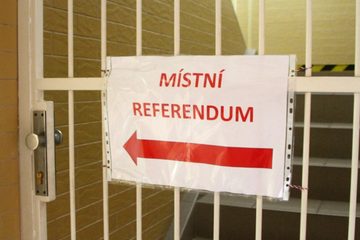
The wind farm referendums in the 2026 municipal elections are a set of 19 local votes held simultaneously with the elections to municipal councils on 9 and 10 October 2026 [1]. The referendums decide on the construction of up to 81 new wind turbines with a total output of 450 megawatts, which, according to an analysis by the Svaz moderní energetiky, corresponds to more than doubling the existing wind capacity in Czechia and to electricity production for approximately 400,000 households [1]. Roughly 220 wind turbines with an output of 380 megawatts are in operation in the country [1].
Where votes are being held
Most referendums are held in the Central Bohemian Region, specifically in Petrovice in the Rakovník area, Kačice in the Kladno area, and Petroupim, Soběhrdy and Teplýšovice in the Benešov area [1]. Four votes take place in the Svitavy area in the Pardubice Region, in the municipalities of Dětřichov, Kamenná Horka, Mikuleč and Sklené [1]. In the Bruntál area in the Moravian-Silesian Region, residents of Horní Benešov, Staré Heřminovy and Zátor are voting [1]. In the Plzeň Region referendums are held in Kralovice, Žihle and Měčín, and in the South Bohemian Region in Radenín and Šebířov in the Tábor area [1]. Votes are also held in Cítoliby in the Louny area in the Ústí nad Labem Region and in Bystrá nad Jizerou in the Semily area in the Liberec Region [1].
In Kačice in the Kladno area, residents earlier supported the project in a poll, after which the municipality concluded a planning agreement with the investor NOHO Energy, and construction of five turbines is being prepared, a project that is going through the environmental impact assessment process [2]. Some residents subsequently drew up a petition and requested a binding referendum, which the council granted [1]. Deputy mayor of Kačice Daniela Veselská said that wind turbines can "bring money to the municipality and at the same time strengthen the energy self-sufficiency of our municipality" [1]. If the five turbines are put into operation, the municipality is expected to receive a one-off CZK 6 million and then CZK 3.5 million a year for the duration of operation, and residents are also to have preferential electricity prices [2]. In Petrovice in the Rakovník area, according to mayor Radek Jelínek, one turbine is to be built, and the municipality is expected to receive CZK 400,000 to CZK 1.5 million a year from the investor, depending on the amount of electricity produced [2].
Development in the number of referendums
Before the October votes, 84 referendums on wind farms had been held in Czechia, with roughly a third of the municipalities voting in favour of construction [1]. Whereas between 2006 and 2022 an average of one to two such votes were held a year, 2026, with 30 referendums, is the highest so far [1]. After the October elections, the total number of referendums on wind farms held in Czechia since 2006 is expected to exceed one hundred [1]. Under the law, a referendum is valid if at least 35 percent of eligible voters take part in it [2].
Arguments of supporters and opponents
Energy expert Martin Ander of the Svaz moderní energetiky said that "open communication by the investor with citizens from day one" is key to a referendum's success and that an offer of a guaranteed annual contribution to the municipal budget and cheaper electricity significantly changes perceptions of a project [1]. According to Ander, wind turbines in Czechia have been operating for more than 20 years and their operation shows that fears about noise and effects on animal health have not been confirmed [1]. Opponents of the projects, by contrast, often cite concerns about noise, disruption of the character of the landscape, falling property prices and effects on surrounding ecosystems, including disturbance of birds of prey or destruction of protected anthills [1].
Acceleration areas and referendum questions
According to Novinky.cz, the planned turbines are being built mainly in open countryside with strong and steady wind; the greatest wind potential is in the Bohemian-Moravian Highlands, in the Nízký Jeseník and in the Ore Mountains, but specific locations are limited by protected areas, distance from dwellings and protection of the character of the landscape [3]. The development of wind energy is to be speeded up by acceleration areas, whose delimitation the government approved in the Spatial Development Plan; permitting wind and solar power plants in them is to be simpler and faster, but after comments from municipalities and other institutions the state significantly reduced the originally proposed extent [3]. Turbines can also be built outside these areas, but investors cannot use the accelerated permitting regime there [3]. According to Kladenský deník, there are 49 sites in Czechia designated for wind turbines [2].
The wording of the questions differs between municipalities. In Kačice in the Kladno area, the vote is on whether the municipality should provide cooperation in the preparation, permitting or implementation of the construction of wind turbines in its cadastral area [2]. In Petroupim in the Benešov area, the decision is whether the municipality, as a party to the permitting procedure, should express disagreement with the siting and permitting of the turbines [2]. Residents of Soběhrdy and Teplýšovice in the Benešov area answer questions on whether the municipality should take all legally available steps to ensure that no acceleration areas are delimited on its territory and no wind turbines are permitted; all three municipalities lie in the locality where the Petroupim acceleration zone is [2].
Positions of the mayors of Kačice and Petrovice
The mayor of Kačice, Libor Němeček, supports the project. According to him, building renewable sources in combination with nuclear power plants is the only way to prevent emissions from fossil fuels. He also sees as a benefit the money for the municipality and its residents, and said that locals fear interference with the landscape and noise [2].
In Petrovice in the Rakovník area, according to mayor Radek Jelínek, the turbine will not burden the municipality apart from its visual impression, because it will be far enough from the built-up area. Further turbines are to be built in the surroundings, and so residents of Petrovice will probably have a view of one of them, even though none will be built in the municipality's cadastral area [2].
Other local referendums in the South Bohemian Region
Besides the referendums on wind turbines in Šebířov and Radenín in the Tábor area, other local matters are also being decided in the South Bohemian Region. In Temelín, on 9 and 10 October 2026 a vote is held on an incinerator for hazardous industrial waste, which the company Quail wants to build in Hůrka near Temelín. The facility, costing one to two billion crowns, would process up to 20,000 tonnes of waste a year. A petition with 2,400 signatures was launched against the project, and another 16 towns and municipalities joined the protest. According to the mayor of Temelín, Josef Váca, residents are to decide in the referendum whether the municipal leadership should take all possible steps to prevent the construction.[4]
Further referendums concern the planned expansion and change of waste-burning technology at the Energoblok Domoradice heating plant in Přísečná in the Český Krumlov area, the Volary bypass in the Prachatice area, and the reconstruction of the road around the pond in Putim in the Písek area. According to Deník, the Putim referendum is scheduled for Friday and Saturday.[4]
Referendums in Přísečná, Volary and Putim
In Přísečná in the Český Krumlov area, the local referendum concerns the planned expansion and change of waste-burning technology at the private heating plant Energoblok Domoradice, which supplies heat and hot water to a quarter of Český Krumlov [4]. Residents of the municipality, which has about 200 inhabitants, signed a petition against the project in 2023 and fear higher noise and traffic. Mayor Jiří Němeček (non-partisan) said that the municipality wants to use the referendum to find out whether people are still opposed and whether it should continue with its steps so far [4].
In Volary in the Prachatice area, the opposition and Šumava associations criticise the region's planned widening of the road from Blažejovice to Volary, which in their view would bring more heavy traffic into the town. They propose a bypass, and a petition calling a referendum on it was signed by 689 people. The town also fears increased traffic because of logistics centres planned in the České Budějovice area [4].
In Putim in the Písek area, the referendum concerns the reconstruction of the road around the pond. According to mayor Eva Marušková (Za rozvoj obce Putim), the municipality had tendered the contract and obtained a subsidy before the proposal to call a referendum was filed [4].
Referendum in Kožlany
In Kožlany in the Plzeň area, on 9 October 2026, simultaneously with the municipal and Senate elections, a referendum was held on the construction of three wind turbines that the company Meridian is considering in the town of approximately 1,500 inhabitants [5][6]. According to the election commission, interest in voting was greater than in previous years from the opening of the polling stations. Most of the first voters approached said they did not want the turbines, citing the cultural and historical landscape and the proximity of the national cultural monument Mariánská Týnice [5][6].
Mayor Václav Kratochvíl said that three years ago the ratio among those voting in a survey was six to one in favour of wind turbines, and the town therefore concluded a contract on a future contract with the company. The councillors did not approve calling the referendum at the beginning of September, but a court decided that the plebiscite should be held, on the initiative of the petition committee [5][6]. A proposal for a type C landscape heritage zone, in which tall structures would not be possible, has been submitted to the state heritage care department. A decision on it and a statement from the army, which has a reserve military airfield on the edge of the town, are expected [5][6]. Residents wanted the referendum following the example of neighbouring Kralovice; in the end 61.24 percent of those voting came out against the construction, with a turnout of 42.21 percent.[11]
Results of the referendums in Majetín, Maršov u Úpice and Záhorovice
Majetín
Residents of Majetín in the Olomouc Region, in a referendum held simultaneously with the municipal elections, voted against expanding gravel-sand extraction into stages six and seven. The municipality had 964 eligible voters, 640 cast a valid vote, and turnout was 66 percent. 497 people voted against the expansion. According to Hanácká Drbna, the referendum is valid and binding for the municipality. Locals feared traffic, noise, dust, effects on the landscape and on groundwater. The extraction company Zepiko had planned to move extraction further from the municipality and offered the municipality more than CZK 70 million. Mayor Miroslava Zavadilová said that the referendum makes it possible to decide according to the clearly expressed will of citizens.[7][8]
According to iDNES.cz, the result of the referendum is binding for the councillors, because more than half of the participants voted for it and at the same time at least 25 percent of all eligible voters; both conditions were met. The question was whether the municipality should, in its independent competence, take all expedient legal steps to prevent gravel-sand extraction from being expanded to stages six and seven. In a letter to residents, the managing director of Zepiko said that extraction would be moved further from the municipality beyond the railway line and its volume would not increase, so traffic and noise in the surroundings would not rise.[8][7]
Maršov u Úpice
Residents of Maršov u Úpice in the Trutnov area rejected in a referendum the construction of wind turbines in the municipality's cadastral area. 116 of 154 voters came to vote (75.32 percent). The first question, whether the municipal authorities should prevent the construction of the turbines, was answered in the affirmative by 77 people, and the second, whether the council should ensure that the zoning plan does not allow the construction, by 76 people. The referendum is valid and binding and arose from a petition. The companies ČEZ and NOHO Energy expressed interest in the plan to build one to three turbines in the municipality. The municipal leadership rejected the offers; according to mayor Monika Sacherová (non-partisan), it did not want to divide residents over a single project. The municipality's cadastral area does not belong to the acceleration zones declared by the state.[9]
The first question, whether the municipal authorities should take all steps to prevent the construction of the turbines, received 77 affirmative answers (66.38 percent of those voting), the second, on amending the zoning plan, 76 (65.52 percent). Because of deadlines, the municipality had originally considered moving the referendum to another date, but at an extraordinary meeting on Thursday 8 October 2026 the councillors rejected the cancellation and confirmed that it would be held on Friday and Saturday. The municipal leadership rejected the 2025 offers from ČEZ and NOHO Energy because, according to the mayor, it did not want to divide residents and make a decision with an impact on the next term of office.[9]
Záhorovice
Residents of Záhorovice, in two simultaneous referendums, voted to keep all three level crossings in the municipality. One referendum was initiated by a local group and concerned one crossing, the other was called by the council for the remaining two. Správa železnic is planning electrification and faster services on the line, and according to the prepared analysis it would be possible to close two of the three crossings. Deputy mayor Jiří Milička said that the municipality needs all three for access to land and properties and that so far it is only an analysis.[10]
Deputy mayor Jiří Milička said that the municipality had expected the result: all three crossings are equipped with light signals and barriers and the municipality needs them for access to land and properties. According to the analysis, two of the crossings could be closed, one without replacement, while for the other a detour road would have to be built. Milička said that this would not achieve a significant speed-up, because neighbouring municipalities lie two kilometres away. He called the referendum, which arose on the initiative of some female residents, unnecessary, because so far it is only an analysis by Správa železnic. The councillors then supplemented the referendum on one crossing with a referendum on the remaining two.[10]
Results of the referendums in the Plzeň Region and in Hrádek
Plzeň Region
In referendums held simultaneously with the municipal elections, residents of Žihle, Kožlany, Kralovice and Měčín rejected the construction of wind turbines. Under the law, a local referendum requires a turnout of at least 35 percent of eligible voters to be valid; the decision is binding if more than half of the participants vote for it and at the same time at least 25 percent of all eligible voters.[11][12]
In Žihle, 52.77 percent of voters took part in the vote and 62.17 percent of them were against the construction; the result is valid. The referendum was proposed by a preparatory committee of local residents. ČEZ wanted to build two turbines on the edge of the municipality, and another near the Baroque farmstead Kalec, which is a cultural monument. Preparation of the project has been halted since August, when the referendum was called. In the event of an agreement, the municipality would receive at least CZK 2 million a year from ČEZ for the duration of operation. In a poll organised by the municipality in 2024, of about 150 participants half spoke in favour of the project and half against.[11][12]
In Kožlany turnout was 42.21 percent and 61.24 percent of those voting were against; according to the town's official notice board, the referendum is valid and binding. The company Meridian wanted to build three turbines here on the edge of the town towards Dřevec. Opponents cited the cultural and historical landscape, the proximity of the national cultural monument Mariánská Týnice and peace without industry.[11]
In Kralovice 69.45 percent of voters were against. The proposal for a referendum was filed by citizens in a petition with about 840 signatures, and the councillors approved it at the beginning of September. In a poll organised by the town in 2024, 52 percent of participants spoke in favour of the project, and the town therefore proceeded with a change to the zoning plan. The Czech company SmartTech wants to build two turbines here on the south side of the town in the valley towards Výrov; Výrov agrees with four turbines towards Kožlany. Opponents warned against interference with the Baroque Cistercian landscape around Mariánská Týnice, against noise and falling property prices.[11][12]
In Měčín in the Klatovy area, according to the election commission's clerk Vladimíra Fialová, 55 percent of voters took part in the vote and 86 percent of them rejected wind turbines; according to her, the referendum is valid and binding. The popular vote was triggered by a group of residents of the municipality of about 1,100 inhabitants. Mayor Stanislav Skala said before the vote that two companies had so far only been finding out the conditions and had submitted preliminary offers; according to Fialová, the company Complexa wanted to build two to 13 turbines up to 250 metres tall.[11][12]
In Kralovice, which has almost 3,500 inhabitants, a proposal for a type C landscape heritage zone, filed by representatives of Mariánská Týnice, was published on the official notice board this June. If approved, tall structures, including wind turbines, could not be built in the area. According to deputy mayor Lukáš Janek, a decision is awaited on which the authorities concerned are to comment, and the town's building department filed an objection because of the zone's strict parameters.[11][12]
Žihle has 1,150 inhabitants and lies on the border of the Plzeň and Ústí nad Labem regions. In Měčín, mayor Stanislav Skala said before the vote that the residents' initiative was spontaneous and that in his view it would have no legal chance, but the municipality takes it as the opinion of the people and accepts it.[11][12]
Hrádek in the Hradec Králové area
In a binding referendum held simultaneously with the municipal elections, residents of Hrádek voted to take over the Church of Saint George free of charge from church property into municipal ownership. 52 people voted in favour, that is 33.5 percent of all eligible voters, and 43 against; of 155 eligible voters in a municipality of about 190 inhabitants, 64.5 percent came.[13][14]
Mayor Hana Ročková (independent) said that the municipality has better options than the Church for obtaining subsidies for repairs of the listed church and that, because of the seriousness of a property decision, the municipality called a referendum. The Church could continue to hold services in the church, and the municipality also wants to organise concerts, exhibitions, Christmas gatherings and weddings. Operating costs, such as electricity and insurance, are estimated at thousands of crowns a year, and the municipality's income this year is about CZK 4.3 million. The municipality already owns the cemetery by the church. The church dates from the middle of the 14th century, the present early Baroque single-nave building from the end of the 17th century, it underwent repairs in 1891 and has been a listed monument since 1958.[13][14]
Chronology
- — Together with the municipal elections, dozens of local referendums, most of them on the construction of wind turbines, are held in municipalities on 9 and 10 October 2026. ČTK / České noviny Ekonomický deník
Related entries: Hrádek, Jedno Ústí, Majetín, Olomouc Region, Plzeň Region, Správa železnic, Záhorovice, Ústí nad Labem
Sources
- Při volbách v říjnu se uskuteční rekordních 19 referend o větrných elektrárnách
- Obyvatelé rozhodnou o vybudování větrných elektráren. Referendum bude i v Kačici
- Novinky.cz
- V Temelíně budou v pátek a sobotu rozhodovat o spalovně v Hůrce
- V Kožlanech je zatím větší zájem o volby, zejména díky referendu o větrnících
- V Kožlanech je zatím větší zájem o volby, zejména díky referendu o větrnících
- Majetín v referendu odmítl těžbu písku. Nepomohly ani slevy na jeho nákup
- Těžbu tu nechceme. Obyvatelé Majetína v referendu odmítli slevy na písek i štěrk
- Obyvatelé Maršova odmítli větrné elektrárny. Hlasovaly tři čtvrtiny voličů
- Zachovejte všechny tři železniční přejezdy, jdou potřeba, rozhodli v Záhorovicích
- Čtyři referenda k větrným elektrárnám v Plzeňském kraji. Voliči je odmítli
- Obyvatelé v referendech odmítli výstavbu větrných elektráren
- Těsné ano pro převzetí kostela. Hrádek rozhodl v referendu
- Lidé v Hrádku na Hradecku se v referendu vyslovili pro převzetí kostela obcí