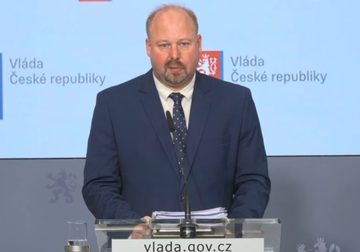
The government of Andrej Babiš was due to discuss, at its meeting on 12 October 2026, an expansion of the oversight powers of the Czech Environmental Inspectorate (ČIŽP) and amendments to the Civil Code. The coalition council was to meet before the session.[1]
Proposals on the agenda
The ČIŽP could gain the power to immediately halt the operation of a business in the event of an imminent threat to residents' health, for example in the case of an accident or a leak of toxic substances. Until now, it had generally first had to order the operator to take corrective measures and set a deadline. The oversight is to be extended to the mining industry, battery production, and the low hundreds of large-scale pig and poultry farms.[1]
According to the Ministry of Justice, the amendment to the Civil Code and other regulations is intended to strengthen the protection of children's rights and clarify terms following the divorce-law amendment in effect since the beginning of 2026. It is meant to explicitly stipulate that in cases of domestic violence, the court will assess whether there are grounds for depriving a parent of parental responsibility.[1]
Also on the agenda were regulations on more efficient use of radio frequencies, a report on the implementation of the National Recovery Plan, a document on state subsidy policy toward non-governmental non-profit organizations, an assessment of developments in public health insurance, and the national strategy for brownfield regeneration by 2030.[1]
Possible topics
The government could also address the amendment on funding teaching assistants, which the cabinet had postponed a week earlier due to the position of Motoristé and SPD. These parties are demanding fundamental changes to inclusive education, or its abolition, citing financial costs. Education Minister Plaga said his task is to convince coalition partners of the need for inclusive education. The government could also discuss the scheduling of items for Chamber of Deputies of the Parliament of the Czech Republic sessions and the second round of the Senate elections.[1]
Related entries: Government of the Czech Republic
Draft constitutional law anchoring the Czech koruna
At its meeting on 26 October 2026, the government was to adopt a position on a parliamentary bill for a constitutional law anchoring the Czech koruna. The bill was submitted by ministers Boris Šťastný and Petr Macinka (both Motoristé), the Speaker of the Chamber of Deputies of the Parliament of the Czech Republic Tomio Okamura (SPD), and MP Filip Turek. The government's legislative experts recommended a neutral position for the cabinet.[2]
The bill would establish the koruna as the currency of the Czech Republic at the constitutional level, meaning that a change of currency would require the consent of three-fifths of all deputies and three-fifths of senators present. Passage requires a three-fifths majority in both chambers of the Parliament of the Czech Republic; according to the daily iDNES, the sponsors lack such a majority, particularly in the Senate of the Czech Republic, where neither Motoristé nor SPD have representatives. The governing coalition holds 108 of 200 seats in the Chamber of Deputies of the Parliament of the Czech Republic, 12 short of a constitutional majority.[2][3]
According to the government's legislative experts, the intention to anchor the koruna is part of the government's program, which envisions submitting a bill including the right to hold and use cash in 2027. The sponsors state that the bill does not rule out joining the eurozone.[2]
Chronology
- — The government is due to take a position at its Monday meeting on 26 October 2026 on the deputies' draft constitutional act to enshrine the Czech koruna in the constitution, submitted by representatives of the Motorists and SPD; government legislators recommended a neutral position. ČTK / České noviny iDNES.cz