Rectors of Czech universities called the draft 2027 budget for higher education insufficient; the Ministry of Education, Youth and Sports responded to their statement on 2 October 2026.
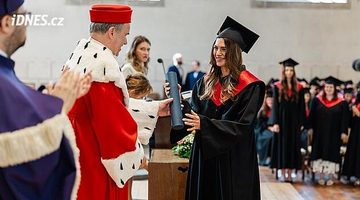
Rectors of universities in Czechia described the underfunding of higher education as a problem for society as a whole, which in their view will affect young people and their families most of all. They pointed out that demographically strong cohorts will be finishing secondary school in the coming years and are heading for universities, and expressed concern about the admission of new students.[1]
The rectors' arguments
Ingeborg Radok Žádná, rector of the Academy of Performing Arts in Prague, said that rectors are aware of the decline in student numbers after the demographic peak. In her view, universities should provide lifelong learning, which she said will be needed in the future.[1]
Jitka Němcová, deputy chair of the Česká konference rektorů pro záležitosti soukromých vysokých škol and rector of Vysoká škola zdravotnická, said that private universities do not offer the same study programmes as public ones. They therefore cannot make up for any shortfall in funding by increasing their capacities.[1]
According to the rectors, there is a risk that, for lack of money, universities will not be competitive, that academics will leave them, and that this will affect the quality of education. The rectors also pointed to the lower share of university-educated people in Czechia: according to the latest OECD report, 29 percent of people aged 25 to 64 have tertiary education, whereas the OECD average is 43 percent and the European Union average about 39 percent.[1]
In the dispute over how much money is needed, an estimate was voiced that universities would need an annual increase of three billion crowns in order to function, not one.[1]
Response of the Ministry of Education, Youth and Sports
Education Minister Robert Plaga (ANO), according to iDNES.cz, does not take concerns about student admissions at the time of the demographic peak lightly and is aware of the underfunding of higher education. On the evening of Friday 2 October 2026, Ondřej Macura, spokesperson for the Ministry of Education, Youth and Sports, wrote in response to the rectors' statement that operating funding for the educational activities of universities rises by one billion crowns in the draft 2027 budget. According to him, the budget for universities is to be 35.9 billion crowns next year, and about 36.2 billion this year under the approved budget.[1]
Plaga said earlier that he had negotiated a year-on-year increase of one billion crowns for universities in the medium-term outlook for 2028 and another billion in 2029. Macura called the growth in the outlook key and a signal that the minister's main aim is to improve the starting negotiating position and the future development of universities.[1]
Scio's plan to found a private university
The company Scio announced a plan to found a private university in Prague, VŠ Scio, which from September 2027 would offer two bachelor's programmes: adult education and development, and innovative entrepreneurship. It could admit 100 and 60 students respectively to the first years, and tuition, according to a company representative, is to be 80,000 crowns a year. Scio intends to increase the capacity of each year in the future.[2][3]
The company submitted its application for state consent to establish a private university in September 2026 and is waiting for that consent and for the opinion of the accreditation authority. According to a company representative, the ministry has 150 days to process it. Scio expects that the subsequent accreditation could be relatively quick and that the admissions procedure would take place in May and June 2027. It intends to keep those interested informed about the course of talks with the authorities, and promises a forecast of the school's opening by February 2027.[2][3]
Along with the application, the company had to submit outlines of the study programmes; according to a company representative, it has a list of about thirty people who will deliver them from 2027. Applications can be submitted only after accreditation is granted. For the adult education and development programme, Scio intends to use the Národní srovnávací zkoušky, which the company runs.[2][3] Scio also has a network of private primary and secondary schools in Prague, Brno, Plzeň, Kolín, Jihlava, Ostrava and České Budějovice.[2][3]
According to the Ministry of Education, Youth and Sports, there are 26 public, two state and 26 private universities in Czechia. At the end of 2025 they had more than 330,500 students, of whom about 33,200 were at private ones.[2]
Related articles: Scio
Chronology
- — The company Scio has announced a plan to found a private university in Prague that would offer two bachelor's programmes from September 2027, and it is awaiting state approval and the opinion of the accreditation body. Pražský deník Novinky.cz
- — Rectors of universities described the proposed higher-education budget as insufficient and warned that universities may be forced to admit fewer students. iDNES.cz iROZHLAS
Sources
- iDNES.cz — 2 October 2026
- Pražský deník — 6 October 2026
- Novinky.cz — 6 October 2026