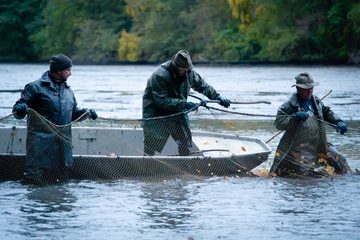
Klatovské rybářství, which manages 390 ponds, has to push back the start of its autumn harvests by a month, to mid-November 2026, because of drought. In normal years the harvests are almost finished by then. Fish for the Christmas table and for export will be harvested in December. According to director Václav Voráček, the reason is the very small amount of water in the holding ponds, where fish from the harvests are taken and are meant to stay until Christmas. Voráček said this to journalists on 31 October 2026.[1][2]
Harvest plan
The company still plans to harvest 130 bodies of water, as in previous years. It sets dates ad hoc and for now postpones them as much as possible in the hope that rainfall will still replenish the holding ponds. It will begin harvesting the main ponds in mid-November. According to Voráček, the fish should last a month in the holding ponds even if it does not rain. Among the large ponds, Myslívský, Merklínský, Mezholezský, Nezamyslický, Břežanský, Liščí and Pirkovský are to be harvested, which are meant to cover the demand for Christmas fish.[1][2]
So far the company has mostly caught younger fish and moved them to ponds with water. It harvests market-size fish only when it knows they will leave for a customer within a week. Voráček said that in 33 years in the field he has not seen such a shortage of water or such a delay in harvests.[1][2]
Fish and prices
According to Voráček, test harvests show the right quantity and categories of fish. The quality is good, but because of the drought and the hot summer there was no opportunity for supplementary feeding, so the individual weights will be lower. Flow-through ponds are at two thirds of the usual level, and the worst off are ponds supplied only by rainfall, of which the company has roughly a third. Fish did not die in large numbers.[1][2]
Voráček estimates that Christmas fish will become five to ten percent more expensive, but prices have not yet been set. Personnel costs and fuel prices are rising, because the company had to remove fish from dozens of the driest ponds. It visited the ponds more often, measured oxygen and installed equipment for oxygenating the water.[1][2]
Sources
- Plzeňská Drbna — 31 October 2026
- Ekolist.cz — 1 November 2026