A record 19 local referendums on building wind power plants in municipalities across Czechia are part of the municipal elections on 9 and 10 October 2026.
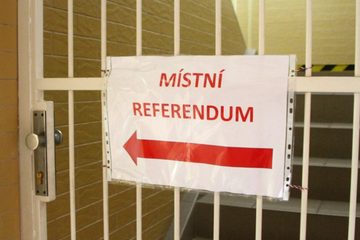
The wind power referendums held alongside the 2026 municipal elections are a set of 19 local votes taking place at the same time as the elections to municipal councils on 9 and 10 October 2026 [1]. The referendums decide on the construction of up to 81 new wind turbines with a total capacity of 450 megawatts, which, according to an analysis by the Svaz moderní energetiky association, corresponds to more than a doubling of Czechia’s existing wind capacity and to electricity generation for roughly 400,000 households [1]. About 220 wind turbines with a capacity of 380 megawatts are currently in operation in the country [1].
Where votes are held
Most referendums take place in the Central Bohemian Region, specifically in Petrovice in Rakovník District, Kačice in Kladno District, and Petroupim, Soběhrdy and Teplýšovice in Benešov District [1]. Four votes take place in Svitavy District in the Pardubice Region, in the municipalities of Dětřichov, Kamenná Horka, Mikuleč and Sklené [1]. In Bruntál District in the Moravian-Silesian Region, residents of Horní Benešov, Staré Heřminov and Zátor vote [1]. In the Plzeň Region referendums are held in Kralovice, Žihle and Měčín, and in the South Bohemian Region in Radenín and Šebířov in Tábor District [1]. Votes are also held in Cítoliby in Louny District in the Ústí nad Labem Region and in Bystré nad Jizerou in Semily District in the Liberec Region [1].
In Kačice in Kladno District, residents earlier backed the plan in a poll; the municipality then signed a planning agreement with the investor NOHO Energy and is preparing the construction of five turbines, whose plan is going through an environmental impact assessment [2]. Some residents subsequently drew up a petition and requested a binding referendum, which the council granted [1]. The deputy mayor of Kačice said that wind turbines could “bring money to the municipality and at the same time strengthen the energy self-sufficiency of our municipality” [1]. If the five turbines are put into operation, the municipality is to receive a one-off CZK 6 million and then CZK 3.5 million annually for the duration of operation, and residents are to get discounted electricity prices [2]. According to the mayor of Petrovice in Rakovník District, one turbine is to be built there, and the municipality is to receive CZK 400,000 to 1.5 million a year from the investor, depending on the amount of electricity generated [2].
Trend in the number of referendums
Before the October votes, 84 referendums on wind turbines had been held in Czechia, with roughly a third of municipalities voting in favour of construction [1]. While between 2006 and 2022 there were on average one to two such votes a year, 2026 is the highest so far with 30 referendums [1]. After the October elections, the total number of wind power referendums held in Czechia since 2006 is expected to exceed one hundred [1]. By law, a referendum is valid if at least 35 percent of eligible voters take part [2].
Arguments of supporters and opponents
An energy expert from the Svaz moderní energetiky association said that “open communication by the investor with citizens from day one” is key to a referendum’s success, and that an offer of a guaranteed annual contribution to the municipal budget and cheaper electricity significantly changes how the project is perceived [1]. According to him, wind turbines have been operating in Czechia for over 20 years, and their operation shows that concerns about noise and effects on animal health have not been confirmed [1]. Opponents of the projects, by contrast, often cite concerns about noise, disruption of the landscape character, falling property prices and effects on surrounding ecosystems, including disturbance of birds of prey or the destruction of protected ant nests [1].
Acceleration areas and referendum questions
According to Novinky.cz, the planned turbines are being built mainly in open countryside with strong and steady wind; the greatest wind potential is in the Bohemian-Moravian Highlands, Nízký Jeseník and the Ore Mountains, but specific locations are limited by protected areas, distance from homes and the protection of landscape character [3]. The development of wind power is to be sped up by acceleration areas, whose delimitation the government approved in the Spatial Development Plan; permitting wind and solar plants in them is to be simpler and faster, but after comments from municipalities and other institutions the state substantially reduced the originally proposed extent [3]. Turbines can also be built outside these areas, but investors cannot use the fast-track permitting regime there [3]. According to Kladenský deník, there are 49 sites designated for wind turbines in Czechia [2].
The wording of the questions differs between municipalities. In Kačice in Kladno District, the vote is on whether the municipality should provide cooperation in the preparation, permitting or implementation of wind turbine construction in its territory [2]. In Petroupim in Benešov District, the vote is on whether the municipality, as a party to the permit proceedings, should object to the siting and permitting of the turbines [2]. Residents of Soběhrdy and Teplýšovice in Benešov District answer questions on whether the municipality should take all legally available steps to ensure that no acceleration areas are delimited on its territory and no wind turbines permitted; all three municipalities lie in the area where the Petroupim acceleration zone is located [2].
Positions of the mayors of Kačice and Petrovice
The mayor of Kačice supports the plan. In his view, building renewable sources together with nuclear power plants is the only way to prevent emissions from fossil fuels. He also sees money for the municipality and its residents as a benefit, and said that locals fear an intrusion into the landscape and noise [2].
In Petrovice in Rakovník District, according to the mayor, the turbine will not burden the municipality except for the visual impression, because it will be far enough from buildings. Further turbines are to be built in the surrounding area, so Petrovice residents will probably have a view of one of them even though none will be built within the municipality’s territory [2].
Other local referendums in the South Bohemian Region
Besides the wind turbine referendums in Šebířov and Radenín in Tábor District, the South Bohemian Region is also deciding other local matters. In Temelín, a vote is held on 9 and 10 October 2026 on a hazardous industrial waste incinerator that the company Quail wants to build in Hůrka near Temelín. The facility, costing one to two billion crowns, would process up to 20,000 tonnes of waste a year. A petition with 2,400 signatures was launched against the plan, and 16 more towns and municipalities joined the protest. According to the mayor of Temelín, residents are to decide in the referendum whether the municipal leadership should take all possible steps to prevent construction.[4]
Other referendums concern the planned expansion and change of waste incineration technology at the Energoblok Domoradice heating plant in Přísečná in Český Krumlov District, a bypass of Volary in Prachatice District, and the reconstruction of a road around a pond in Putim in Písek District. According to Deník, the Putim referendum is scheduled for Friday and Saturday.[4]
Referendums in Přísečná, Volary and Putim
In Přísečná in Český Krumlov District, the local referendum concerns the planned expansion and change of waste incineration technology at the private heating plant Energoblok Domoradice, which supplies heat and hot water to a quarter of Český Krumlov [4]. Residents of the municipality, which has about 200 inhabitants, signed a petition against the plan in 2023 and fear more noise and traffic. The mayor, an independent, said that the municipality wants to use the referendum to find out whether people are still opposed and whether it should continue with the steps taken so far [4].
In Volary in Prachatice District, the opposition and Šumava associations criticise the road widening between Blažejovice and Volary planned by the region, which they say would bring more heavy traffic into the town. They propose a bypass, and 689 people signed a petition calling a referendum on it. The town also fears increased traffic because of logistics centres planned in the České Budějovice area [4].
In Putim in Písek District, the referendum concerns the reconstruction of a road around a pond. According to the mayor (Za rozvoj obce Putim), the municipality had tendered the contract and obtained a subsidy before the proposal to call the referendum was submitted [4].
Referendum in Kožlany
In Kožlany near Plzeň, a referendum on the construction of three wind turbines, which the company Meridian is considering in the town of about 1,500 inhabitants, was held on 9 October 2026 alongside the municipal and Senate elections [5][6]. According to the election commission, interest in voting had been greater since the polling stations opened than in previous years. Most of the first voters approached said they did not want the turbines, citing the cultural and historic landscape and the proximity of the national cultural monument Mariánská Týnice [5][6].
The mayor said that three years ago, in a poll, voters were in favour of wind turbines by six to one, and the town therefore concluded a preliminary contract with the company. The councillors did not approve calling a referendum at the beginning of September, but a court ordered the plebiscite on the initiative of the petition committee [5][6]. A proposal for a type C landscape heritage zone, in which tall structures would not be possible, has been filed with the state heritage care department. A decision on it and a statement from the army, which has a reserve military airfield on the edge of the town, are awaited [5][6].
Chronology
- — Together with the municipal elections, dozens of local referendums, most of them on building wind turbines, are being held in municipalities on 9 and 10 October 2026. Czech News Agency / České noviny Ekonomický deník
Sources
- ČTK / České noviny — 28 September 2026
- Kladenský deník — 28 September 2026
- Novinky.cz
- Deník: České Budějovice / Jižní Čechy — 9 October 2026
- ČTK / České noviny — 9 October 2026
- Deník: Plzeňský kraj — 9 October 2026