The environmental group Arnika presented in Pardubice rankings of the largest polluters of the environment in Czechia for 2025, in which facilities from the Ústí nad Labem Region appeared most often.
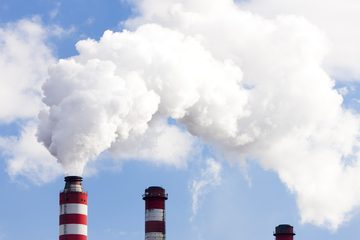
Representatives of the environmental group Arnika presented rankings of the largest polluters of the environment for 2025 to journalists in Pardubice on 29 October 2026. Facilities from the Ústí nad Labem Region appeared in them most often, followed by the Moravian-Silesian Region and the Pardubice Region. Significant sources of pollution included power plants, chemical companies and other industrial facilities. The reported quantities of perfluorinated substances, formaldehyde and greenhouse gases rose compared with the previous year.[1][2]
Arnika has compiled the rankings since 2005 from data in the Integrated Pollution Register. For 2025, 1,233 facilities reported data to it.[1][2]
The largest source of greenhouse gases was the Počerady Power Station in the Louny area with 4.2 million tonnes, followed by the Tušimice, Prunéřov and Ledvice power stations. The total reported amount of formaldehyde rose to more than 22.5 tonnes, of which about seven tonnes came from Kronospan CR in Jihlava. In the ranking of styrene and other carcinogenic or potentially carcinogenic substances, first place went to ACO Industries Tábor in Sezimovo Ústí with 9.7 tonnes of styrene.[1][2]
For mercury in emissions to air, water and soil, coal-fired power and heating plants made up eight of the ten top-ranked facilities and together reported 985 kilograms. Počerady accounted for 242 kilograms, Prunéřov for 183 and Chvaletice for 172 kilograms. Nikola Jelínek of Arnika said that mercury released into the air by power plants does not break down in the environment and can remain there for decades. In the ranking of mercury in emissions and waste, the Synthesia chemical plant in Pardubice led with 532 kilograms, the highest amount it has ever reported. Spolana Neratovice, which ended PVC and caprolactam production in 2025, dropped out of the leading positions.[1][2]
Eva Maříková, spokeswoman for Sev.en Česká Energie, said that the Počerady power station operates under valid permits, complies with emission limits and acts in line with Czech and European law. In her words, given the size of the plant it is understandable that it is also among the largest producers of emissions.[1][2]
Wastewater treatment plants made up seven of the ten largest sources of cyanides discharged into water; the one in Ostrava reported 676 kilograms, the one in Třinec 612 kilograms. The largest amount of dioxins, 30 grams in toxic equivalents, was reported by the Gemec-Union waste processing plant in Ostrava-Mariánské Hory. The amount of ozone-depleting substances rose from 5.7 to 71 kilograms, with almost the whole increase coming from CHS Epi in Ústí nad Labem with 66 kilograms. The most PFAS, 44 kilograms, was reported by the biological wastewater treatment plant in Pardubice-Rybitví, roughly two thirds of the amount reported across Czechia. Jelínek called this amount alarming.[1]
Chronology
- — The environmental association Arnika published its ranking of the largest polluters in Czechia for 2025, in which facilities from the Ústí nad Labem Region ranked most often, followed by the Moravian-Silesian Region and the Pardubice Region. ČTK / České noviny Ekolist.cz
Sources
- ČTK / České noviny — 29 October 2026
- Ekolist.cz — 29 October 2026