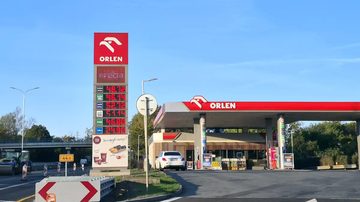
On 1 October 2026 a price regulation of motor fuels set by the Ministry of Finance came into force in the Czech Republic. The maximum price of diesel was set at 48.72 korunas per litre, and of petrol at 46.14 korunas per litre. The measure applies to filling stations across the country and is the government's second intervention in fuel prices in 2026; the government first regulated prices from April to mid-July by capping sellers' margins and reducing the excise duty on diesel[1][2].
Impact on prices
On the very first day of the regulation, according to the findings of the Czech News Agency, diesel at filling stations became cheaper, often by as much as three korunas per litre, exceptionally even more; on the D5 motorway at Šlovice near Plzeň the price of diesel fell by 4.18 korunas in a day[1]. Petrol became cheaper only at some pumps, because many of them had already been selling it on Wednesday 30 September at a price lower than the newly set cap[1][3]. On the Wednesday before the regulation was introduced, the best-selling petrol, Natural 95, cost an average of 45.86 korunas per litre in the Czech Republic and diesel 49.44 korunas per litre, according to data from the company CCS[1].
Examples from filling stations
The Shell filling station in Prague's Chodov cut the price of diesel from 51.90 to 48.70 korunas per litre and of petrol from 46.90 to 46.10 korunas per litre, that is, just under the set caps[1][3]. Diesel was also cut by OMV stations in Prague, Orlen in Hradec Králové and on the D5 near Plzeň, MOL in Olomouc and Třebíč or the filling stations at the Makro wholesalers in Ostrava-Hrabová and near Velká Bystřice in the Olomouc area, where diesel became cheaper by roughly three korunas[1][2][3]. The Orlen filling station on the D10 motorway near Mladá Boleslav cut the price of diesel from 52.50 to exactly 48.72 korunas and of petrol from 47.90 to 46.14 korunas, that is, to the level of the permitted maximum[2]. Fuels were sold below the set cap by the state-owned EuroOil network operated by Čepro, where diesel in Mladá Boleslav cost 47.50 korunas per litre and petrol stayed at the same price as before the regulation, 45.50 korunas[2].
Regional differences
On the Wednesday before the cap was introduced, petrol was cheapest in the Liberec Region (45.58 CZK) and dearest in Prague (46.36 CZK); diesel was cheapest in the south of Moravia and in the Karlovy Vary Region (49.33 CZK) and dearest in the Olomouc Region (49.6 CZK)[1]. In Liberec prices at the pumps mostly fell after the regulation was introduced, though some of the cheapest stations raised them; at the stations on the main road through town the price of petrol mostly fell from 46.90 korunas to the permitted maximum of 46.14 korunas per litre[1].
Context of the regulation
The Ministry of Finance intends to set the caps for individual days until at least the end of October 2026 on the basis of a rolling three-day average of wholesale prices, to which is added the sellers' maximum margin capped at 2.50 korunas per litre[2][3]. The measure also includes a reduction of the excise duty on diesel from 9.95 korunas to 8.011 korunas per litre, while the excise duty on petrol does not change[3]. According to the government, the rise in fuel prices is connected with the conflict in the Middle East, where the USA together with Israel attacked Iran in February 2026, and Iran in response restricted traffic in the Strait of Hormuz[2].
Related entries: Ministry of Finance
Adjustment of the caps for the weekend of 3–5 October 2026
According to the price bulletin, the Ministry of Finance lowered the maximum price of diesel by four hellers to 48.54 korunas per litre and raised the cap for petrol by five hellers to 45.97 korunas per litre. The adjustment applies over the weekend and on Monday and does not concern premium fuels.[4]
The ministry intends to regulate prices until the end of October. It calculates the maximum price from a rolling three-day average of wholesale prices and adds a trade margin capped at 2.50 korunas per litre. Compliance with the caps is to be checked by the Specializovaný finanční úřad. Since the start of October the excise duty on diesel has also been reduced from 9.95 to 8.011 korunas per litre.[4]
The ministry publishes prices every working day for the following day; on non-working days the last announced price applies. It called on filling station operators to resort to the highest prices only exceptionally.[5]
Caps for 9 October 2026 and price developments
On 8 October 2026 the Ministry of Finance set the maximum prices for Friday 9 October 2026 in the price bulletin: diesel may cost at most 47.29 korunas per litre, that is six hellers more than the day before, and petrol at most 46.31 korunas per litre, that is 24 hellers more. The caps do not apply to premium fuels. Compliance with prices is checked by the Specializovaný finanční úřad.[6][7][8]
According to data from the company CCS, diesel cost an average of 47.44 korunas per litre on Wednesday 7 October 2026, that is two korunas less than a week earlier, and Natural 95 petrol an average of 45.26 korunas, 60 hellers less. The average price of diesel was thus 53 hellers below the price cap valid that day, and of petrol 81 hellers. Compared with the previous year fuels are, according to CCS, markedly dearer: Natural 95 was 10.86 korunas per litre cheaper then, diesel 14.29 korunas.[6][8]
Analysts approached by the Czech News Agency expected a further fall in the price of diesel, which could come close to 47 korunas per litre in the following week; the price of petrol, in their view, will not change significantly and will stay around 46 korunas. They named an escalation of the conflict in the Middle East as a possible source of change.[6] According to Novinky.cz, the price of Brent crude exceeded 103 dollars per barrel on the morning of 8 October and American WTI crude 91 dollars.[7]
The ministry calculates the maximum prices from a rolling three-day average of wholesale prices and adds to them a maximum trade margin of 2.50 korunas per litre. Since the beginning of October a reduced excise duty on diesel has also applied, 8.011 korunas per litre instead of 9.95 korunas; for petrol it has not changed.[8] The government already used fuel price regulation in spring 2026, when it lasted from mid-April to mid-July and, according to the Ministry of Finance, cost the state budget roughly a billion korunas a month.[8]
Chronology
- — Since the beginning of October the government has regulated fuel prices in Czechia: the Ministry of Finance announces maximum prices of petrol and diesel for the following day, and the measure is to remain in force until the end of October. ČTK / České noviny Novinky.cz
- — The Ministry of Finance adjusted the maximum fuel prices for the weekend: the cap on diesel fell slightly, while the cap on petrol rose. ČTK / České noviny Echo24
- — After the introduction of a price cap, diesel at filling stations became cheaper by up to three crowns, petrol only in places. ČTK / České noviny Novinky.cz
- — The Ministry of Finance set the price cap for 1 October 2026 at CZK 48.72 per litre of diesel and CZK 46.14 per litre of petrol. ČTK / České noviny ČT24
Sources
- Nafta po regulaci zlevnila až o tři koruny, benzin jen někde
- Nafta na pumpách díky regulaci výrazně zlevnila
- Ceny nafty letí dolů: Po zásahu vlády zlevnila až o tři koruny!
- Echo24
- Novinky.cz
- Pohonné hmoty v Česku v uplynulém týdnu po regulaci zlevnily
- Stropy u benzínu i u nafty se zvyšují
- Regulace cen nafty a benzinu: Před víkendem ceny pohonných hmot vzrostou