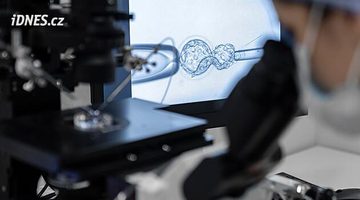
In a ruling made available on the official notice board on 9 November 2026, the Supreme Court of the Czech Republic definitively rejected the claim of a man who sought to disavow paternity of a child conceived by assisted reproduction. Donor sperm was used in the procedure, and the man claimed he had assumed that only his own genetic material would be used. The court stressed that he had given prior written consent to the possible use of donor sperm.[1][2]
Course of the proceedings
The man signed a declaration of consent by the parents, on the basis of which the registry office entered him as the father. He later filed a petition to disavow paternity, which was also supported by the child's mother, his former partner. The district court rejected the petition in 2025, reasoning that it had not been shown that the man had been misled: before each cycle he had signed requests, instructions and informed consents, thereby expressing the will to become a father even if donor material was used. The decision was upheld in 2026 by the regional court, referring to the Civil Code, under which paternity cannot be disavowed for a child born between the 160th and 300th day after artificial insemination. The exceptions are the absence of the partner's consent or a finding that the mother became pregnant naturally by another man.[1][2]
The Supreme Court's decision
In his appeal on a point of law, the man argued that he had seen the possible use of an anonymous donor's material only as a fallback option and that informed consent to the specific method actually carried out was missing. The Supreme Court stated that a man's consent to his partner's artificial insemination is regarded by law as a legal act by which the man accepts the role of father. In the court's view, the protection of the interest of a child born with the help of assisted reproduction rests primarily on the legally recognised father, if the procedure was carried out with his consent. The quality of relations between the parents and the child, or their later attitudes to parenthood, are not relevant in proceedings on disavowal of paternity.[1][2]
The panel with presiding judge Roman Fiala said in the ruling that paternity of a child resulting from artificial insemination is not a matter of chance, as with natural conception, but an “intentional legal and moral obligation” towards the mother and the child. According to the Czech News Agency, the courts gave priority to the best interest of the child, for example with regard to the father's maintenance duty.[1][2]
Chronology
- — In a judgment published on 9 November 2026, the Supreme Court of the Czech Republic definitively rejected a man's attempt to deny paternity of a child conceived by artificial insemination with donor sperm, because he had given prior written consent to that procedure; the court described such insemination as a deliberate legal and moral commitment of both partners. ČTK / České noviny iDNES.cz
Sources
- ČTK / České noviny — 9 November 2026
- iDNES.cz — 9 November 2026