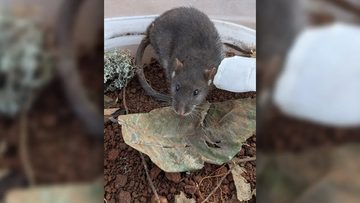
An Ethiopian-Czech research team, including experts from the Brno-based Ústav biologie obratlovců of the Czech Academy of Sciences, caught in the Yayu biosphere reserve in south-western Ethiopia an aquatic rodent of the genus Nilopegamys. Scientists had not recorded this genus for almost a hundred years.[1][2] The animal was caught by Mengistu Wale of the Ethiopian Biodiversity Institute.[1] The original find dates from 1927 from the Gojjam area in north-western Ethiopia, that is, at a considerable distance from the site of the present catch.[1]
Site of the find
The Yayu biosphere reserve was designated by UNESCO in 2010. It protects the remnants of Ethiopia's montane tropical rainforests, including natural populations of Arabica coffee, and includes forests, watercourses, wetlands and farmland.[1] The rodent was caught in the transition zone of the reserve, that is, between the protected area and the surrounding landscape.[1]
The genus Nilopegamys
These are aquatic rodents adapted to life in wetlands and along watercourses. According to a study from 1995, it has broad hind feet and dense fur and differs from other African rodents tied to aquatic habitats.[1]
Expedition and further research
The expedition carried out in the reserve the first systematic monitoring of small mammals within the initiative of the Nature and Biodiversity Conservation Union (NABU).[1] Alena Fornůsková of the Ústav biologie obratlovců said that the possible rediscovery of a species not observed for almost a hundred years suggests that even after decades of research, extraordinary surprises may await scientists.[1] Further research is to focus on describing the rodent, its genetics, ecology and the diseases it may transmit.[1]