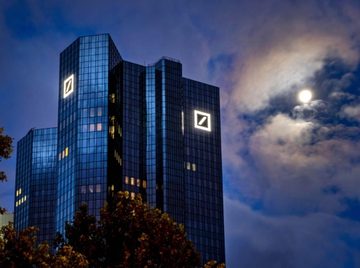
According to an analysis of leaked internal documents of the German Deutsche Bank, the bank ended cooperation with three Czech banks in 2018. The reason was concern that non-transparent flows of money from entities in countries outside the European Union pass through them and that they do not sufficiently comply with anti-money-laundering rules. The findings concerning Czechia were provided to the Czech News Agency by the server investigace.cz, which took part in the analysis.[1]
The leaked materials
According to the Financial Times, more than 15 million internal documents leaked from Deutsche Bank, including e-mails, internal investigations and minutes of management meetings. According to the organisation Barracuda Media, the documents were handed to journalists by two whistleblowers who wanted to draw attention mainly to the bank's relations with Russian oligarchs. Processing took almost a year and involved 230 journalists, with investigace.cz taking part for Czechia and Slovakia.[2]
Findings on Czech banks
In 2018 Deutsche Bank prepared an analysis of the impact of the money-laundering scandal in the Baltic countries in 2007 to 2015. It examined how far the scandal had affected its partners and whether it faced reputational risks from it.[1]
For Česká spořitelna, the largest Czech bank by number of clients, the documents describe concerns about possible breaches of anti-money-laundering rules and non-transparent movements on the accounts of clients from risky countries and tax havens.[1]
For PPF banka, part of the PPF group, which had assets of CZK 357.5 billion in 2025, the documents state a high share of non-transparent payments and transactions from tax havens. Deutsche Bank described some of the movements as "indications of flows from Russian non-residents".[1]
For J&T Banka, which managed assets of CZK 388 billion in 2025, Deutsche Bank saw risks in flows of money from entities based outside the EU. According to the documents, it first wanted to adjust the way of cooperation and then ended it.[1]
Deutsche Bank also examined ČSOB and UniCredit Bank, where it had concerns about clients of the shell-company type, that is, businesses without real commercial activity whose ultimate owner often cannot be established. It did not end cooperation with these two banks.[1][2]
Statements of the banks
PPF banka said that it applies standard anti-money-laundering procedures and that compliance is checked by internal and external audits. According to its representative, Deutsche Bank ended only the provision of investment banking services, because no capital-market transactions were taking place between the banks at the time.[1]
J&T Banka stated that it had always acted in accordance with the law and that no proceedings had been conducted against it for breaching anti-money-laundering rules. According to its spokesperson, Deutsche Bank named a small number of foreign transactions as the reason for ending correspondent banking; the two banks cooperate today.[1]
Sources
- ČTK / České noviny — 17 November 2026
- Seznam Zprávy — 17 November 2026