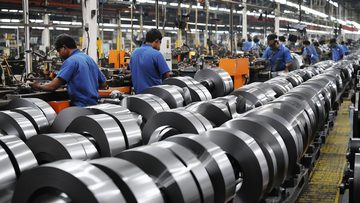
The purchasing managers' index (PMI) in Czech manufacturing reached 55 points in October 2026, after 53.5 points in September. This is the highest value since February 2022, shortly before the Russian invasion of Ukraine. The figure was published on 2 November 2026 by S&P Global. The 50-point mark separates growth of the sector from contraction; conditions in Czech industry have been improving for the eighth month in a row [1][3].
Developments in the sector
Output, new orders and employment grew faster, and exports strengthened markedly. Output has increased for the eleventh month in a row, at the fastest pace since March, to which, according to the survey, investment in capacity also contributed. Hiring was the strongest since January 2022. Manufacturers raised purchases at the fastest pace since April 2022 and stocks of inputs increased, although delivery times lengthened noticeably owing to a shortage of some components including chips, disrupted supply chains and delays in sea transport [1][3].
Inflationary pressures also increased: input and output prices rose at the fastest pace in four and three months respectively. They remained lower than in the euro area and than in the second quarter after the outbreak of the war in the Middle East. Price growth was named as the main risk for the next twelve months, and the output outlook fell to its lowest level since April [1][3].
Comments
The economics director of S&P Global Market Intelligence, Trevor Balchin, described the October result as the highest in 56 months. According to him, the Czech sector outperformed the euro area for the eighth time, and the gap between them is the largest since March 2016. Exports recorded their best month since August 2021 [1][3].
The chief economist of Trinity Bank, Lukáš Kovanda, said that the result shows Czech manufacturers winning orders beyond the recovery of European industry and possibly taking over part of the orders from more expensive Western European firms. The chief economist of the bank Creditas, Petr Dufek, pointed out that the growth in new orders suggests good results in the coming months too, but that higher energy prices will increasingly be reflected in prices. According to him, electricity for next year is trading at roughly twice the February prices and gas is about three times more expensive [2].
Sources
- ČTK / České noviny — 2 November 2026
- Novinky.cz — 2 November 2026
- Seznam Zprávy — 2 November 2026