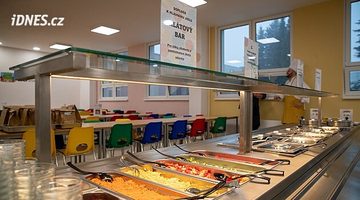
On 22 November 2026 the Ministry of Health told the Czech News Agency, in response to a query, that school canteens have no obligation to cook special medical diets for children. In the planned amendment to the decree on school meals it wants to keep the provisions that allow them to be prepared. The ministry was represented by the deputy chief hygienist Matyáš Fošum.[1][2][3]
The decree currently in force allows a canteen to cook special meals for children who have a doctor's certificate, for example for a gluten-free or lactose-free diet. Fošum said that dietary catering is not about “individual eating preferences, but directly about protecting children's health”. According to him, the ministry will also insist that expert approval of recipes for diets be retained.[1][3]
Canteens do not have to cook vegetarian or vegan meals. According to Fošum, the school is to look for a suitable solution with the parents, for example by allowing the child to eat food brought from home. Under the current rules a canteen must give the child the necessary help so that he or she can eat among classmates. Heating or storing the food is not mandatory, but the canteen may offer it.[1][3]
Fošum also said that hygiene conditions of operation, food safety, storage, compliance with temperatures and the handling of allergens will continue to be checked. The ministry wants to keep assessing menus professionally, monitor salt and sugar content and use laboratory analyses.[1][3]
According to the sources, Czechia has almost 9,000 school catering facilities, in which almost two million children eat every day. According to a 2025 survey, about a third of canteens provided meals according to a medical diet.[1][3]
From September 2026 canteens were to cook according to a new consumption basket, but the ministries of education and health are to amend the decree and the norms are to be only advisory. Prime Minister Andrej Babiš (ANO) said earlier that this fulfils his pre-election promise that the government would not force school canteens to cook specific things. The Food Chamber welcomed the abolition of binding norms. Representatives of parents and of public-health initiatives criticised it. The board of the Centre for Nutrition, Metabolism and Diabetes of the Third Faculty of Medicine of Charles University pointed to the need for primary prevention in children. The director of the National Institute of Public Health, which prepared the rules, expressed doubts whether canteens would comply with the advisory norms.[1][2][3]