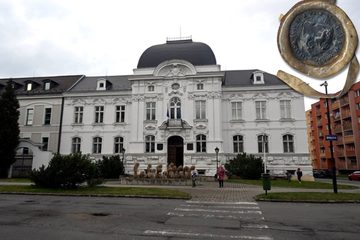
On 11 November 2026 the Archiv města Ostravy displayed in its lecture hall, from 1 p.m. to 5 p.m., a parchment charter bearing the oldest surviving seal of the town of Moravská Ostrava. The charter was made on 11 November 1426, so on the day of the display it was exactly six hundred years old.[1][2]
The charter
The charter, written in German, measures 25.5 × 16 centimetres and is a promissory note combined with a pledge. Two noble brothers, owners of Čertova Lhota in present-day Mariánské Hory, borrowed fifty kopas of groschen from a burgher of Ostrava and undertook to repay the debt. If they failed to repay it, the village was to pass to the creditor and his descendants.[1][2][3] According to the archive's director Hana Šústková, the borrowed sum would correspond today to roughly five million crowns.[1][2] The witnesses include representatives of the then town administration, and according to Šústková the charter is therefore one of the oldest records of the functioning of municipal self-government in Moravská Ostrava.[2][3]
Three seals hang on the charter: two smaller ones belong to the noble brothers and the third to the town. The town seal is of black wax, set in a wax bowl, and its sealing surface has a diameter of 47 millimetres.[1][2][3] Šústková compared it to a present-day official stamp or electronic seal.[1]
The Ostrava horse
The seal is the oldest known surviving depiction of a saddled horse, which is still in the coat of arms of Ostrava today. The horse on it walks in a Gothic shield and has a saddle, bridle, halter and stirrups.[2] "We can state that the Ostrava horse is now celebrating at least 600 years," said Šústková.[1] It is not clear when the horse entered the town's heraldry, and no grant document that would explain it has survived.[1][2] The best-known legend says that the horse saved the town from enemies during a siege. Who the enemies were is not known.[1][2]
Storage
The charter was in the town registers and came to the archive when it was founded in 1923. It is normally stored in a vault depository with specially maintained temperature and humidity, belongs to the three most valuable documents of the archive and, according to Šústková, had not been displayed for several decades.[1][2] According to her, long-term display would risk damage from light, so a faithful copy is used in teaching and promotional events.[1] Šústková described as even more precious the charter of Charles IV from 1362.[1]